

Quick answer: After a buyer’s inspection, you have three basic responses: make the repair, give a credit, or lower the price. Sort the requests by what actually matters, get your own contractor bid, and remember that your buyer’s loan type limits how large a credit can be. Anything you learn about the house may also need disclosing later.
The inspection report lands in your inbox, and it is forty pages long. There are photos of your furnace from angles you have never seen. Somewhere on page twelve, an inspector with a flashlight has opinions about your gutters.
Take a breath. Almost every report on an older house is long, and almost every buyer asks for something. This is simply the part of the sale where both sides work out what the house needs and who pays for it.
What inspections tend to flag in older Metro East homes
Belleville, Millstadt, Freeburg and the older parts of O’Fallon and Mascoutah have plenty of houses that have been standing a long time. Older houses tend to produce the same handful of findings.
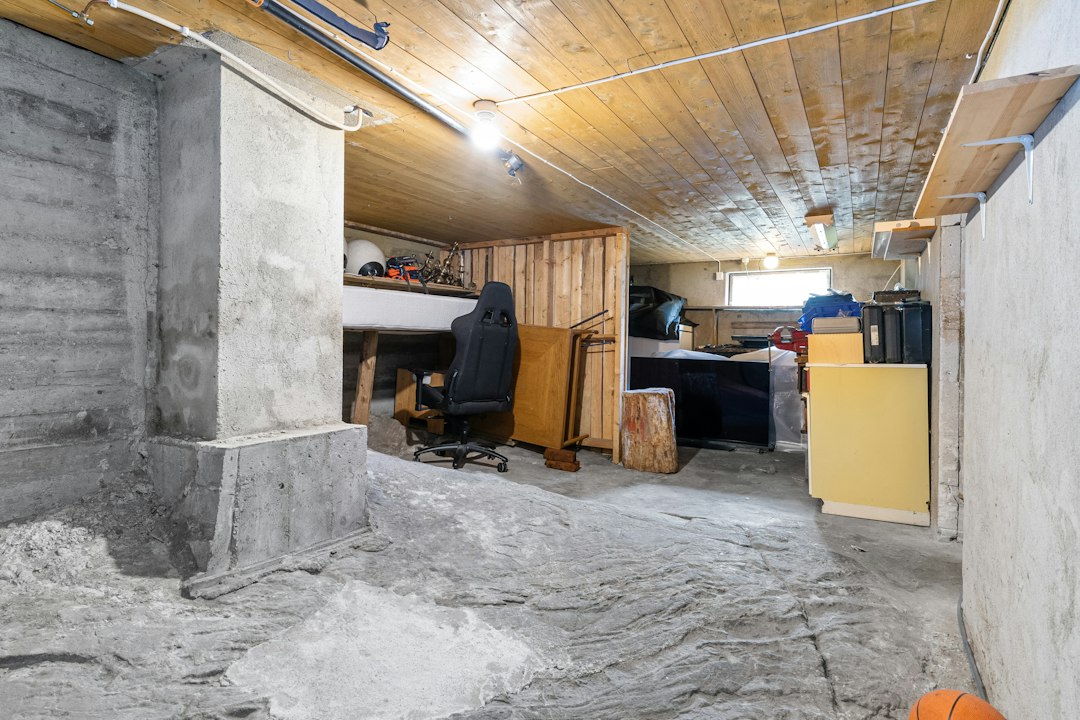
- Foundation cracks and bowed walls. Many hairline cracks are cosmetic. Horizontal cracks, bulging block walls or doors that suddenly stick are the kind of thing an inspector will tell the buyer to have a structural engineer look at.
- Grading and water. Soil sloping toward the house, short downspouts, a damp basement corner or a tired sump pump.
- Electrical panels. Older panels, double tapped breakers, ungrounded outlets and do it yourself wiring in the basement show up often.
- Older roofs. A roof near the end of its life will get a note even if it is not leaking today.
- Sewer laterals. Some buyers pay for a camera to be run down the line from the house to the street. Old clay pipe, root intrusion and offset joints are common findings.
If one of these shows up on your report, you are in very normal company.
Radon: the test Illinois tells every buyer to run
The Illinois Emergency Management Agency strongly recommends that all homebuyers have an indoor radon test done before they buy. Its real estate testing guidelines describe short term tests of 48 hours or longer in the lowest livable level of the home, under closed house conditions that start at least 12 hours before the test. The guidance is to fix the home if the result is 4 picoCuries per liter (pCi/L) or more.
For you as the seller, the Illinois Radon Awareness Act requires you to give the buyer the IEMA radon pamphlet and a radon disclosure form, and to share any test results in your possession that show elevated levels. The law does not require you to test or mitigate. If a buyer’s test comes back high, a mitigation system installed by a licensed radon mitigator is the usual fix, and it is a common item to negotiate.
Read the request before you react
The buyer’s request is usually a much shorter document than the report. Before you answer any of it, sort each item into one of three piles.
- Safety and structure. Electrical hazards, active leaks, gas issues, elevated radon, real foundation movement. These are the items a reasonable buyer will not let go, and often the ones a lender or appraiser will care about too.
- Systems near the end of their life. The old water heater, the aging roof, the furnace from a previous decade. These are worth a conversation, not an automatic yes.
- Maintenance and cosmetics. Loose handrails, missing outlet covers, caulk, a dripping faucet. Small, cheap, and sometimes easier to just do than to argue about.
Your purchase contract sets the timelines for the inspection period and your response, so check those dates the day the request arrives. If something in the contract is unclear, that is a question for your real estate attorney, not a guess.
Your three ways to respond
1. Make the repair
You hire the work done before closing. This keeps the price intact and can reassure a nervous buyer. The downside is that the buyer may question the quality, and a contractor delay becomes everyone’s delay. Keep the invoices, and expect the buyer to want to see the finished work.
2. Give a credit
You agree to a credit at closing, and the buyer handles the repair after they own the house. Buyers often like this because they pick the contractor. Sellers often like it because the work, and the scheduling headaches, are no longer theirs. The catch is that credits are limited by the buyer’s loan, which is covered below.
3. Lower the price
A price reduction avoids the credit limits entirely, but it can create a new question: whether the appraisal and the loan still line up with the new number. It also puts the lower price on the record as the sale price. For a larger item, like a roof, it can still be the cleanest answer.
You can also combine these, or decline some items outright. Saying no to the cosmetic list while saying yes to the safety items is a perfectly normal response.
How your buyer’s loan limits a credit
Loan programs cap how much a seller can contribute toward the buyer’s costs, and the cap depends on the loan type. A few examples from the program documents themselves:
- Conventional loans sold to Fannie Mae: the Selling Guide caps interested party contributions on a primary residence at 3%, 6% or 9%, depending on how much the buyer is putting down.
- FHA loans: HUD’s handbook allows interested parties to contribute up to 6% of the sales price toward the buyer’s closing costs and certain other items.
- VA loans: the VA limits seller concessions to 4% of the home’s reasonable value, while normal closing costs the seller pays are not capped.
The buyer may already be using part of that room for closing costs. Have your agent confirm with the buyer’s lender what credit the loan can actually absorb before you agree to a number. A credit the lender will not allow is not a credit.
Get your own contractor bid
Buyers often attach a repair estimate to their request, and those estimates are not always written with your wallet in mind. Before you agree to a dollar figure, call a contractor you trust and have them look at the actual problem.
Sometimes the second opinion says the scary item is minor. Sometimes it confirms the buyer is right and saves you a week of arguing. Either way, you are negotiating with a real number instead of a feeling.

What you have to disclose if the deal falls through
This is the part sellers tend to miss. Illinois’ Residential Real Property Disclosure Act requires sellers to disclose material defects they have actual knowledge of, on a form with 24 statements covering things like the basement and foundation, the roof, the electrical and plumbing systems, and radon.
Two parts of that law matter after an inspection:
- Before closing, if you become aware of an error, inaccuracy or omission in the disclosure you already gave, the Act says you must supplement it in writing.
- If this buyer walks, what you learned does not walk with them. If the inspection taught you about a material defect you did not know about before, that knowledge generally belongs on the next buyer’s disclosure report.
The Act also gives a buyer certain rights to terminate when a supplement reveals a material defect, including when the defect is repairable but the seller declines, or fails to agree in writing, to repair it within 5 business days. How that applies to you is a question for your real estate attorney. The takeaway: an inspection report can change what you must tell future buyers.
Should you get a pre-listing inspection?
Some sellers hire their own inspector before listing. It is a reasonable idea with real tradeoffs.
- The upside: no surprises. You can fix things on your own schedule, get calm bids, and price the house knowing what is really there.
- The downside: what you learn, you know. Findings can become disclosure material whether or not you fix them, and the buyer will very likely still order their own inspection.
For an older house with a basement you have wondered about for years, knowing early usually beats learning it mid contract. For a newer house in good shape, it may be money you do not need to spend. Condition also feeds into how you price your house.

Frequently asked questions
Do I have to fix everything on the home inspection report?
No. The inspection report is information for the buyer, and the repair request is a negotiation. You can agree to repairs, offer a credit, lower the price, or decline items. Your purchase contract sets the timelines and what happens if the two sides cannot agree, so read it or ask your attorney.
Is a repair credit better than doing the repairs myself?
Often it is simpler, because the buyer picks the contractor and you avoid scheduling work before closing. The limit is the buyer’s loan: conventional, FHA and VA programs each cap seller contributions, so have the buyer’s lender confirm the credit is allowed before you agree to it.
What is the radon action level in Illinois?
IEMA’s real estate testing guidelines say to fix the home if the radon test result is 4 picoCuries per liter (pCi/L) or more. Short term real estate tests run 48 hours or longer under closed house conditions. Illinois sellers must give buyers the IEMA radon pamphlet and disclosure form, but are not required to test.
If my buyer backs out after the inspection, do I have to tell the next buyer?
Illinois’ Residential Real Property Disclosure Act requires sellers to disclose material defects they have actual knowledge of. If the inspection made you aware of a material defect, that knowledge generally belongs on the disclosure you give the next buyer. Confirm the specifics with your real estate attorney.
Want a second set of eyes on a repair request?
It helps to know what your house is worth as it stands today, before anyone hands you a list. Start with a free home value estimate, and see our home sellers guide for St. Clair County for the rest of the process. Already have a report in hand? Give us a call and we will talk it through.
Craig Ziegel, Single Tree Team, eXp Realty. Serving Belleville, O’Fallon, Shiloh, Swansea, Mascoutah, Millstadt, Freeburg and the rest of St. Clair County.