
Quick answer: Common scams aimed at home sellers include fake wiring instructions at closing, criminals posing as owners to sell property they do not own, fake buyers who send overpayment checks, high-pressure “we buy houses” contracts, and rental scams that copy your listing photos. The best defense: verify everything by phone, at a number you already know.
Selling a house puts a lot in public: your address, your photos, the fact that you are moving, and soon a large amount of money changing hands. Scammers read listings too.
None of this should scare you off selling. Most of these schemes fall apart the moment someone picks up the phone and checks. Here is what to watch for.
1. Fake closing and wiring instructions
A criminal gets into, or convincingly imitates, the email of someone involved in your sale, such as the attorney, the title company or an agent. Near closing, you get a normal-looking message saying the wiring instructions have changed, or asking for your bank details so your proceeds can be sent. The account belongs to the scammer.
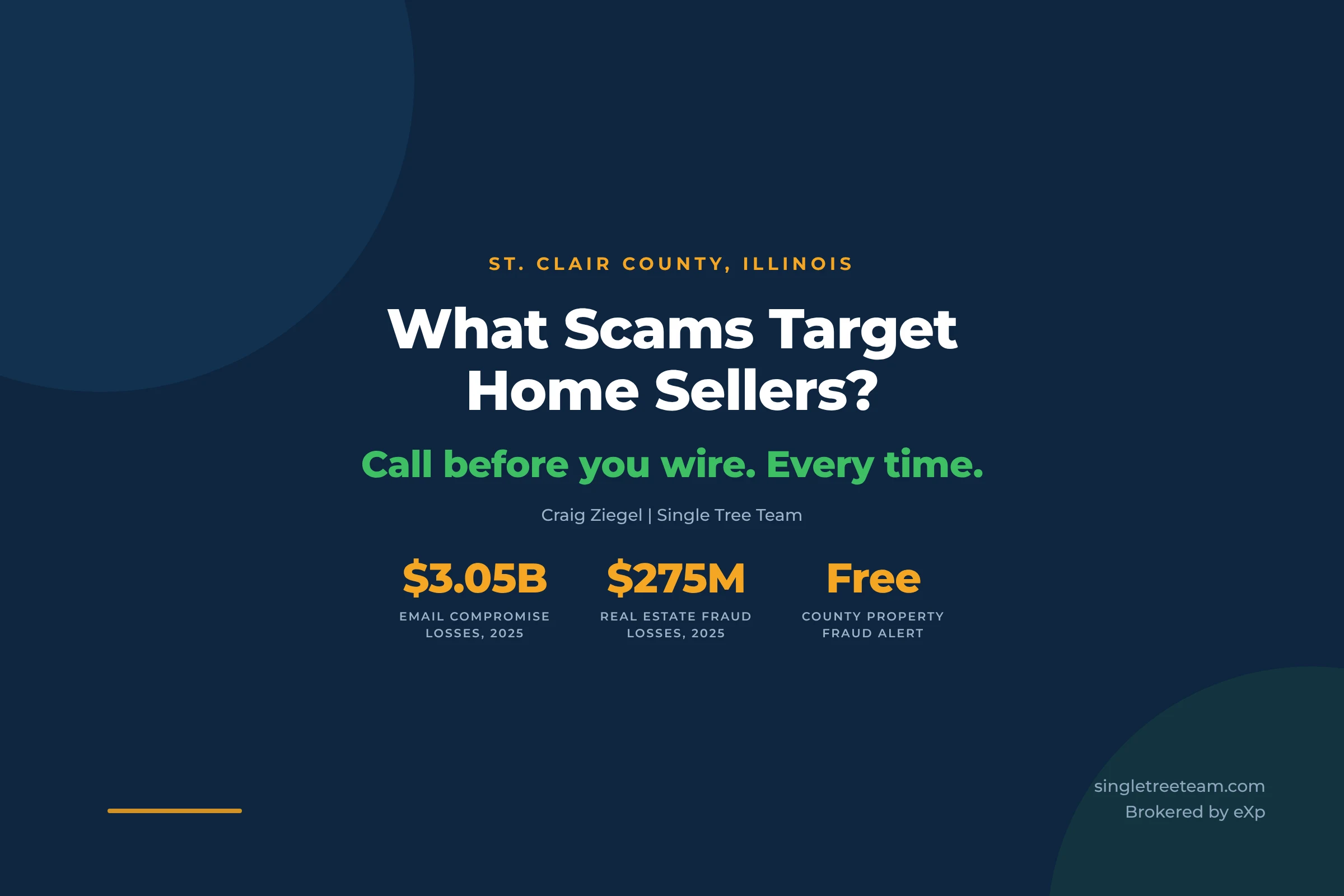
The FBI’s Internet Crime Complaint Center calls this business email compromise. In its 2025 annual report, IC3 recorded 24,768 business email compromise complaints with reported losses of more than $3.04 billion, across all industries. The report describes a 2025 case in which people closing on a home got an email impersonating their attorneys and wired more than $449,000. Because they reported it quickly, the FBI’s Recovery Asset Team was able to get the receiving bank to put the full amount on hold.

How to protect your closing money
- Never change wiring or payout instructions based on an email or text, even one that looks like it came from your attorney, title company or agent and replies to an old thread.
- Call to confirm, using a number you already know. Use the number on your attorney’s or title company’s website or engagement letter, not the one in the message. The FBI’s own advice is to look up the phone number yourself and verify any change in account numbers or payment procedures with the person making the request.
- Be suspicious of urgency. “This has to go out in the next hour” is a pressure tactic, and the FBI specifically warns to be wary when someone presses you to act quickly.
- If something goes wrong, move fast. Call your bank immediately and ask it to contact the receiving bank, then file a complaint at ic3.gov.
2. Seller impersonation and deed fraud
In a June 2026 public service announcement, the FBI warned about criminals who impersonate the owners of vacant property parcels, use fake IDs and throwaway email addresses and phone numbers to contact real estate agents and title companies, and try to sell land they do not own. The red flags the FBI lists include a “seller” who will only communicate by email, text or internet phone numbers, pushes to close quickly, is willing to take below market value, and asks for unusual payment arrangements.
The FBI’s warning focuses on vacant parcels, and the same logic applies to any property nobody lives in: no one is there to notice a sign in the yard.

St. Clair County has a free alert for this
The St. Clair County Recorder of Deeds offers a free notification program called Property Fraud Alert. According to the county, it notifies you by phone call, text or email when a new document is recorded that contains the name you enrolled with. You can find the details on the Recorder’s deed scam page.
The county is clear about the limits: the alert gives awareness, it does not prevent fraud, and it is not possible in Illinois to “lock” a title. It also notes that recording a fraudulent document does not by itself transfer legal ownership. If you suspect fraud, the county says to contact law enforcement, consult a real estate attorney, and notify your title insurance company if you have one.
The county also warns about official-looking letters offering a copy of your deed for a fee. You do not need to pay for that. The Recorder’s office provides a copy free of charge.
3. Fake buyers with overpayment checks
A “buyer” sends a cashier’s check or other payment for more than the agreed amount, then asks you to wire back the difference. The check later bounces. By then the refund you sent is gone.
The FTC explains why this works: banks have to make deposited funds available quickly, so seeing the money in your account does not mean the check is good. Fake checks can take weeks to be discovered, and you are the one who has to pay the bank back. IC3 logged 2,194 overpayment complaints in 2025.
In a normal home sale, earnest money and closing funds usually move through escrow, the title company and the attorneys, not straight from a buyer to you. Any buyer who wants to pay you directly, and then wants some of it back, is not a buyer.
4. “We buy houses” pressure and contracts that cloud your title
Plenty of cash buyers are legitimate. The problems come from pressure tactics and paperwork that does more than the pitch suggests.
- The lowball with a deadline. A quick offer well under market value, and a push to sign today. If you do not know what your house is worth, you cannot judge the offer.
- The contract that gets flipped. Some “buyers” never plan to buy. They sign you to a cheap contract, then try to sell that contract to someone else. In Illinois, dealing in assignable purchase contracts on 2 or more occasions in any 12 month period falls within the Real Estate License Act’s definition of a broker, which requires a license. You can check anyone’s license on the IDFPR license lookup.
- Cash now, strings for years. Some companies offer a small payment in exchange for a promise to use their services if you ever sell, and require that a memorandum of the agreement be recorded against your property. State consumer protection officials, including the Tennessee Attorney General’s office, have warned homeowners to read these contracts carefully, noting they tend to target older adults and can affect future refinancing.
The fix for all three is the same: do not sign anything on the spot, and have a real estate attorney read any contract that touches your house before you sign it.
5. Rental scams that use your listing photos

Once your house is listed, its photos and description are online. The FTC warns that scammers copy the pictures and descriptions from real listings, swap in their own contact information, and advertise the home for rent. Victims pay a deposit to someone with no right to rent the place, often by wire or gift card because the scammer insists on it. IC3’s real estate category, which includes rental fraud, recorded 12,368 complaints and more than $275 million in reported losses in 2025.
As the seller, you are not the one losing money here, but you may be the one with strangers knocking on the door. A few habits help:
- Search your address online every so often while you are listed, and look for rental ads you did not create.
- Tell your listing agent right away if you find one, so it can be reported to the website.
- If someone shows up saying they rented the house, point them to the listing agent and suggest they report it at ic3.gov or to the FTC.
The habits that stop almost all of it
- Save your attorney’s, title company’s and agent’s phone numbers at the start of the sale, from sources you trust.
- Verify every money instruction by calling one of those numbers.
- Treat urgency as a warning sign, not a reason to hurry.
- Never sign a contract on the spot, and have an attorney review anything that touches title.
- Sign up for the county’s free Property Fraud Alert, especially if you own land or a home you do not live in.
This post is general information, not legal advice. If you think you have been targeted, talk to your bank, your attorney and law enforcement. For the bigger picture of the selling process, see our home sellers guide for St. Clair County.
Frequently asked questions
What should I do if I get an email changing my wiring instructions?
Do not reply and do not use any phone number in the email. Call your attorney or title company at a number you already had, such as one from their website or your engagement letter, and confirm directly. If money has already been sent, call your bank immediately and file a complaint at ic3.gov.
Does St. Clair County offer a property fraud alert?
Yes. The St. Clair County Recorder of Deeds offers a free Property Fraud Alert program that notifies you by phone, text or email when a document is recorded containing the name you enrolled with. The county notes it provides awareness but cannot prevent a fraudulent document from being recorded.
Can someone steal my house just by filing a fake deed?
According to the St. Clair County Recorder of Deeds, recording a document does not automatically transfer legal ownership, and a fraudulent deed does not override the rights of a lawful owner. It can still cause real problems, so contact law enforcement and a real estate attorney right away if you suspect it.
How do I know if a cash offer on my house is a scam?
Watch for pressure to sign immediately, an offer far below what similar homes sell for, a buyer who wants to send you more money than agreed, or a contract that lets them assign it or record something against your property. Know your home’s value first, and have an attorney review the contract before you sign.
Know your number before anyone makes you an offer
A lowball offer only works on someone who does not know what their house is worth. You can get a free home value estimate in a couple of minutes, and if an offer or an email ever looks off, you are welcome to call and ask. Checking is free. Wiring money to the wrong account is not.
Craig Ziegel, Single Tree Team, eXp Realty. Serving Belleville, O’Fallon, Shiloh, Swansea, Mascoutah, Millstadt, Freeburg and the rest of St. Clair County.